
Adding a Second EV Charger in a Strata: Capacity, Approval and Cost Sharing
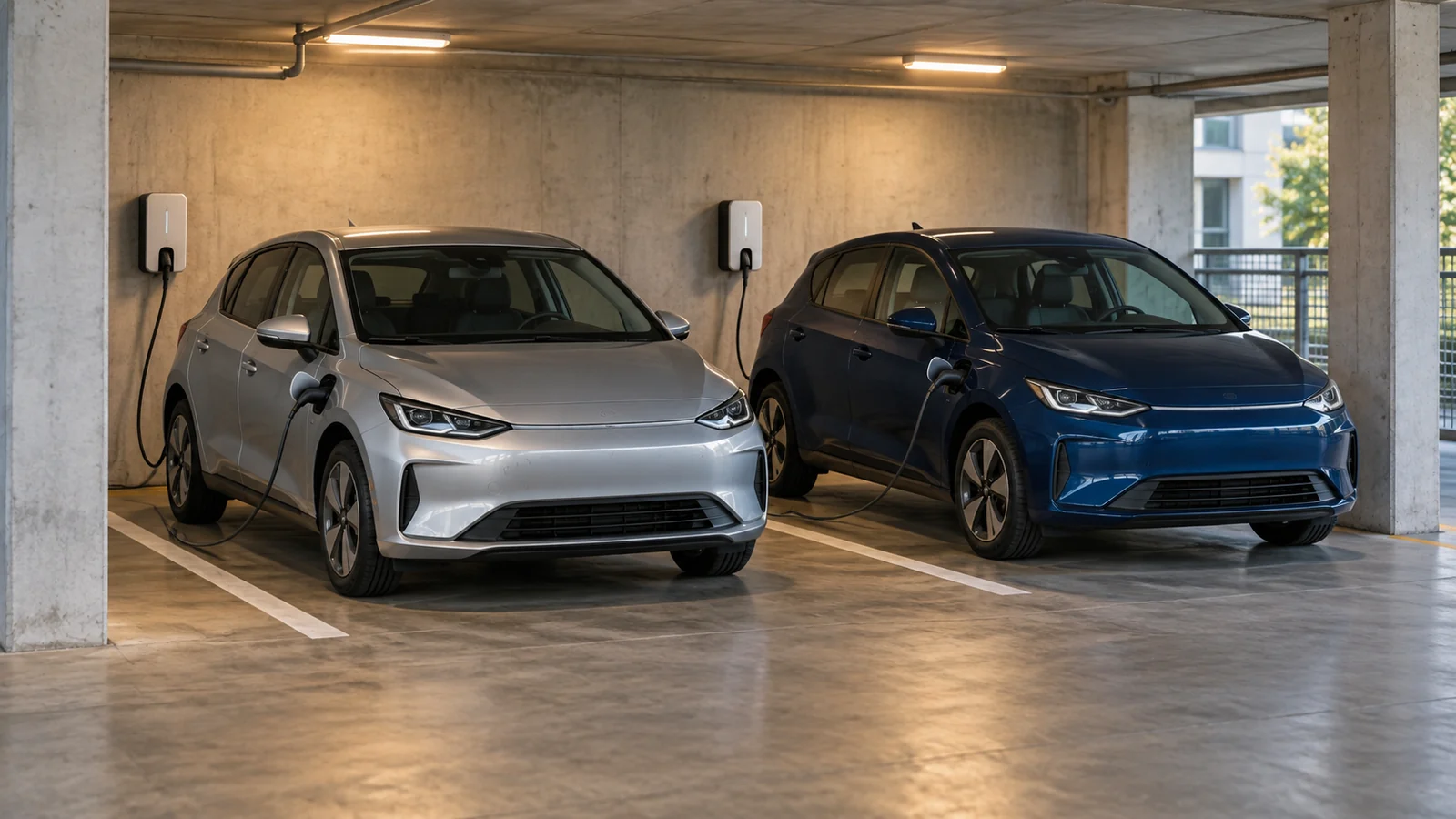
An existing charger proves that one installation was possible under a particular arrangement. It does not establish that a second vehicle can receive the energy it needs before departure, that another stall has the necessary permission, or that the original equipment can join a larger managed system.
Start with the two vehicles' charging windows and energy needs. Then ask an appropriately qualified electrical contractor to assess the existing installation and the proposed addition together. The useful comparison is not simply one charger versus two. It is whether the permitted system can deliver the required energy, on time, without creating an unsupported assumption about the building's capacity or future users.
Describe both cars before choosing another box
Record each vehicle's usual arrival time, departure time and energy needed for the next use. Include the difficult recurring day, not only an average weekend. One driver may be home overnight while the other has only a short stop between shifts. Two cars in the same household can therefore have very different charging requirements.
Use kilowatt-hours for energy and kilowatts for charging power. Power multiplied by charging hours gives energy under a constant-power assumption. The figure required from the electrical supply should account for charging losses; it is not necessarily identical to the increase displayed in the battery. Vehicle limits and operating conditions can also affect what is actually delivered.
Check whether both vehicles need simultaneous access, whether moving a car is practical and permitted, and whether a shared charger elsewhere is reliably available. A plan that depends on moving vehicles at 2 a.m. may be mathematically possible but a poor household arrangement. Do not assume you can run a cable across another stall or circulation route because it reaches.
Why enough overnight energy may still arrive too late
Consider a hypothetical approved system with a steady 6 kW total available to these two vehicles. This is an energy illustration, not a wiring design, equipment recommendation or assurance that any building has 6 kW spare.
Both cars arrive at 10 p.m. Car A remains until 8 a.m. and needs 18 kWh from the supply. Car B leaves at 2 a.m. and needs 20 kWh. These assumed supply-side requirements already include whatever charging losses the example allows; no further loss percentage is added.
Across ten hours, the system could supply 60 kWh. The two cars together need only 38 kWh. That total looks comfortable, but it does not prove the shorter-window car will be ready.
Suppose an equal-sharing arrangement supplies 3 kW to each car while both are charging. Car B receives 3 × 4 = 12 kWh before leaving. It is 8 kWh short. Car A has received 12 kWh at that point and can finish its remaining 6 kWh later. The household still has a problem even though unused overnight capacity remains.
Now test a different, explicitly assumed control arrangement: the approved equipment can prioritize Car B at 6 kW while Car A waits, then give Car A the full output. Car B's 20 kWh takes three hours and twenty minutes, finishing at 1:20 a.m. Car A's 18 kWh takes another three hours, finishing at 4:20 a.m. Both departure requirements are met in this simplified schedule.
That result depends on suitable equipment, permitted operation and the assumed uninterrupted output. It is not a suggestion to bypass controls or improvise switching. Ask the contractor whether the proposed system can actually implement the required priority and what happens during a communications failure or reduced building capacity.
The two-vehicle charging-window worksheet reproduces both schedules. It also includes a counterexample: if Car B is available for only two hours, even all 6 kW delivers just 12 kWh. Rearranging the same capacity cannot supply 20 kWh in that window. You would need a different supported solution, a longer window or charging elsewhere.
Check the shared infrastructure, not just the second stall
Ask what supplies the existing charger and what else uses that capacity. The relevant constraint may be at the charger, the shared circuit, a distribution panel or the building supply. An electrical planning report can help explain broader demand, including other electrification plans, but it is not itself approval for your installation or proof of a particular charging speed.
An EV Ready plan serves a different purpose. BC Hydro describes a professional plan intended to support at least one EV Ready space per dwelling, or per stall where there are fewer stalls than dwellings. That minimum does not establish a second space for every household. Read how the actual plan treats additional vehicles and the minimum performance when adoption increases. BC Hydro multi-unit charging program.
The current July 15, 2026 program guide requires consideration of existing peak demand, spare capacity and charging performance, together with the recommended solution's costs. It also requires discussion of alternative electrical designs. Those are useful questions for comparing proposals even when you are not assuming a rebate. EV Charger Rebate Program Guide, EV Ready plan requirements.
Have the contractor identify whether the first charger is compatible with the proposed controller, billing platform and future expansion. “Add a second charger” may involve replacing the first one or adding communications equipment. A low station price can conceal those shared costs. Conversely, a managed solution might address the household's needs without the larger upgrade initially assumed. The assessment must demonstrate that result for the actual site.
The owner-request rules have an activation date
As of September 8, 2026, do not assume the statutory EV request process has already started for every strata. Where an electrical planning report is required, the process starts at the earlier of obtaining the first report and the applicable deadline to obtain it. For stratas not required to obtain that report, the date is December 31, 2026. The regulation also prescribes the request's contents and a three-month decision period once the statutory process applies. Strata Property Regulation, sections 5.3–5.6.
Confirm the building's position before relying on that timeline. A properly made request requires more than a retail link: it includes the proposed location and contractor-prepared work, cost and time information. Before the statutory process applies, obtain the applicable approval requirements rather than assuming there is no route to request work.
Under the Act's process, unreasonable refusal is prohibited, but approval is not unconditional. The strata may consider electrical demand and compatibility and impose reasonable written conditions. The owner's right to use the proposed common-property stall also matters. A second car does not create a right to a second stall. Strata Property Act, sections 90.1–90.3.
Separate installation, shared upgrades and ongoing bills
Ask for a quote divided between the second stall's work, changes to the existing charger, shared controls or distribution, and any building-service upgrade. Show permits, professional work and network equipment rather than comparing two quotes that cover different scopes.
Then identify who pays each category and the authority for that arrangement. Do not divide a shared upgrade by the current number of interested drivers and assume that is the lawful or agreed allocation. Ask what later users pay, whether early participants have any documented reimbursement arrangement, and who pays to replace failed shared equipment.
Some EV-related strata decisions have lower voting thresholds, but an EV special levy still requires a three-quarter vote. The decision to install and the decision to fund are not interchangeable. BC strata EV guidance.
Ongoing electricity billing is another layer. BC Hydro explains that a strata passing charging costs to residents may need to administer that billing separately from its utility account. Compare consumption charges with software, administration and maintenance fees; do not assume a second connector doubles every fee or costs nothing to maintain. BC Hydro metering and billing options.
Keep any rebate outside the committed funding total until the current eligibility, pre-approval and payment conditions are supported. BC Hydro requires pre-approval before starting or committing to eligible work. A past rebate for the first installation is not approval for this one. For a purchase, use our broader condo EV charging guide for existing rights and records. Contact JQ Properties if two-car charging is essential to your search, with both driving schedules and the building's current charging documents.
By Justin Qiao, Personal Real Estate Corporation, Justin Qiao Group | RE/MAX Crest Realty.

