
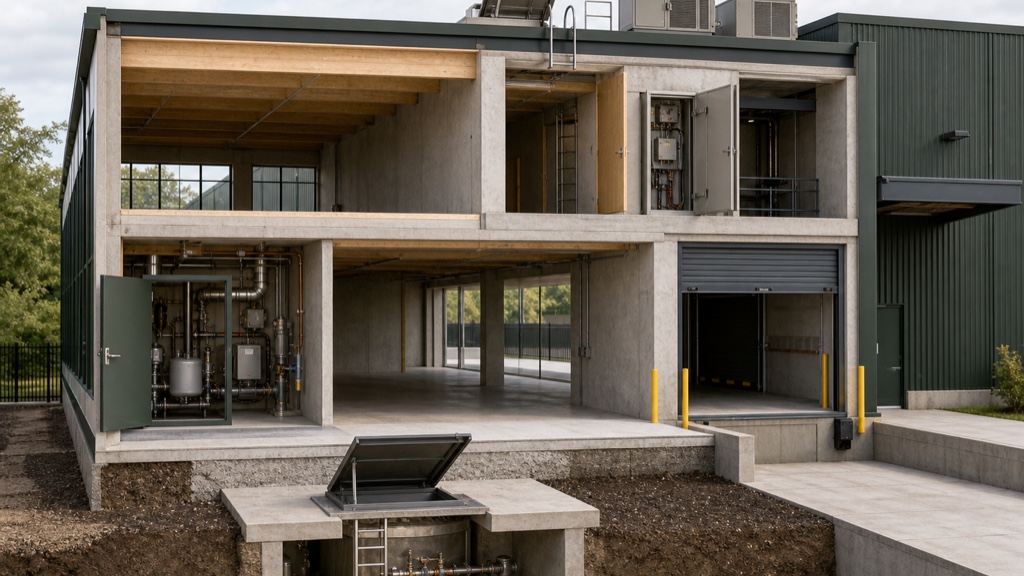
Commercial Property Access Plan Before Condition Removal
Prepared for JQ Properties readers in British Columbia. Justin Qiao Personal Real Estate Corporation, REMAX Crest Realty, Justin Qiao Group.
Access is a workstream
Schedule entry, escorts, shutdowns and deliverables before access delays consume the review window. Use an access plan that coordinates entry, escorts, shutdowns and required deliverables before the review window closes.
Seventy-two hours before access
Confirm the contractual access right, proposed date, people attending, spaces required and any building rules. Send one consolidated request that explains the work without asking the landlord or seller to approve a specialist’s conclusion. If a shutdown, ladder, roof hatch, tenant escort or after-hours entry is needed, name it now.
Twenty-four hours before access
Each specialist confirms arrival time, duration, equipment, insurance documentation and deliverable. The coordinator tests keys, loading access and contact numbers. A “ready” status means the person, place and permission are all confirmed; an appointment in a calendar is not enough.
If access is refused or narrowed
Record who refused, the time, the reason and the exact area or activity affected. Then separate the response into alternatives:
- reschedule within the condition period;
- obtain a document, photograph or remote interview that answers part of the question;
- narrow the specialist’s scope and record the resulting limitation;
- seek an extension or other contractual response through counsel;
- decide with the unresolved consequence visible.
Do not treat a substitute as equivalent merely because it is faster. A roof photograph, for example, may help locate an issue but cannot automatically replace a roof inspection.
Responsibility matrix for the visit
| Work item | Coordinates access | Defines technical scope | Controls the answer | Receives the deliverable |
|---|---|---|---|---|
| HVAC review | Transaction coordinator | HVAC contractor/engineer | Specialist within stated scope | Buyer and adviser team |
| Zoning inquiry | Buyer/agent supplies use facts | Municipality defines submission needs | Municipality on its process; counsel on legal effect | Buyer and counsel |
| Lease file review | Coordinator obtains documents | Counsel | Counsel | Buyer |
This matrix prevents the access coordinator from becoming the accidental author of a technical, municipal or legal conclusion.
Sequence by irreversibility
Schedule work that can invalidate later work before work that merely refines it. If the municipality has not confirmed the submission path for the intended use, an expensive layout study may be premature. If a specialist needs a ceiling cavity opened, arrange authority and restoration responsibility before the visit. The access plan should therefore show both calendar order and decision dependency.
Cost matters, but “cheapest first” is not always efficient. A low-cost review that depends on a missing survey may need to wait; a short municipal call may determine whether several specialist visits are relevant. Record the reason for the sequence so a delayed task is not mistaken for an oversight.
Cost and access decisions
Record any cancellation fee, minimum call-out, restoration cost or access deposit before confirming the appointment. If several specialists need the same space, decide whether one coordinated window is practical without compromising scope. Cost-saving should not force one specialist to rely on another’s observations outside that person’s mandate.
When the condition deadline is close, give the buyer a clear choice among rescheduling, narrower evidence, an authorized contractual response or proceeding with the limitation recorded. The plan should make that trade-off visible before the access window is lost.
Record who has authority to accept each change. A specialist may accept a different appointment time, while only the parties or their authorized advisers can address contractual timing.
Access-plan control board
Access is a project dependency, not a calendar invitation. Start by matching each specialist to the areas, records and operating conditions needed for useful work. A visit that excludes the roof, service room or working equipment can produce a report whose limitation appears only after the condition deadline.
Send one consolidated access request to the seller, landlord or property manager. It should state who will attend, purpose, duration, required areas, proposed activities, insurance requirements and the deliverable date. Confirm what cannot be accessed before the specialist travels.
| Attendee | Areas or items requested | Access preparation | Expected deliverable |
|---|---|---|---|
| Building inspector | All accessible building areas and service rooms | Escort, keys, ladders and exclusions | Written report with inaccessible areas listed |
| HVAC contractor | Units, controls, roof or mechanical room as applicable | Landlord approval and safe roof access | Condition, age and follow-up scope |
| Electrician | Panels, service, equipment loads and relevant plans | Shutdown restrictions and tenant operations | Capacity observations and recommended testing |
| Environmental consultant | Site history, suspect materials or identified areas | Sampling consent and chain-of-custody needs | Scoped findings and limitations |
| Appraiser or lender inspector | Premises, comparable facts and requested documents | Confidential areas and scheduling window | Lender-ready report or inspection confirmation |
| Buyer operations lead | Workflow, loading, storage, parking and customer access | Permission for photos and measurements | Operational fit list with unresolved constraints |
Sequence people, spaces and shutdowns
Work backwards from the required deliverable. If an engineer needs a clear ceiling area, the plan must identify the room, escort, ladder or lift, safety requirements and any shutdown before proposing a visit time. A general access confirmation is not enough. Assign each prerequisite to the party that controls it and set a confirmation deadline early enough to replace a failed appointment.
Example: one room, four dependencies
An HVAC contractor can attend on day five, but roof access requires a building representative who is unavailable until day nine. If the final report is due on day eleven, the dependency is visible immediately. The buyer can reschedule, narrow the visit, seek an extension or decide how to treat the inaccessible equipment instead of discovering the limitation on day twelve.
Define the deliverable before entry
Sequence shared dependencies once. The property manager may be able to open several spaces during one visit, while a specialist needs exclusive access to only one. Build a route, record who may photograph or sample, and confirm restoration responsibilities. After the visit, compare the planned deliverables with what was actually obtained; an attended appointment can still leave the decision unsupported.
Access failures and alternatives
Occupied properties may require privacy controls, restricted photography or visits outside business hours. Testing may be invasive or interrupt service. Heritage, strata, industrial or food-use premises can add approval and safety requirements. The plan records those constraints without assuming permission.
Forty-eight-hour readiness check
- List every specialist and required area on day one.
- Ask each specialist what would make the visit incomplete.
- Combine access requests to reduce disruption.
- Confirm escorts, keys and roof/service-room entry.
- Record insurance or safety prerequisites.
- Set report dates earlier than the condition cutoff.
- Escalate denied or partial access immediately.
- Attach access limitations to the decision memo.
Related due-diligence pages
- Use the commercial due-diligence checklist
- Review lease assignment dependencies
- Coordinate a Greater Vancouver commercial file
How the plan was constructed
The plan is an original coordination board assembled from access owner, prerequisite, location, timing and deliverable fields.
Copyable access brief
Request
Property/area, proposed date and window, people attending, work requested, equipment, shutdown or escort needs, insurance documents, restoration responsibility and site contact.
Acceptance record
Record the approver, approved spaces, restrictions, arrival procedure and any condition such as after-hours entry. Attach the response. If access is partial, identify what cannot be observed and which specialist conclusion will be limited.
Day-of exception
If a key fails, a tenant refuses entry or a system cannot be shut down, log the time and affected scope. Call the decision owner while alternatives still exist. A photograph or document may answer a narrow fact, but the specialist should state whether it changes the deliverable.
The brief becomes the handoff between transaction timing and technical scope. It shows the buyer what was actually available without asking the coordinator to interpret the specialist’s findings.
After the visit
Collect each specialist’s deliverable, scope limitation and open request. Link them to the access plan, then update the condition memo. An appointment marked complete should not conceal an area that was inaccessible or a report that still depends on documents.
If access was refused or unsafe, record the exact area, reason and decision consequence. Ask whether a later escorted visit, remote document review or specialist-only attendance can answer the open question. The substitute should address the same evidence need; it should not be described as equivalent merely because the original appointment could not proceed.
How the plan was constructed: official references
- City of Vancouver Zoning and Development By-law — accessed 2026-07-25.
- City of Richmond Zoning Bylaw 8500 — accessed 2026-07-25.
Coordinate the access window
Send JQ the property type, condition deadline and proposed specialist list to identify access dependencies before bookings are made. Contact JQ Properties to discuss the transaction context.

