
Who Pays for HVAC Repairs in a Commercial Lease?
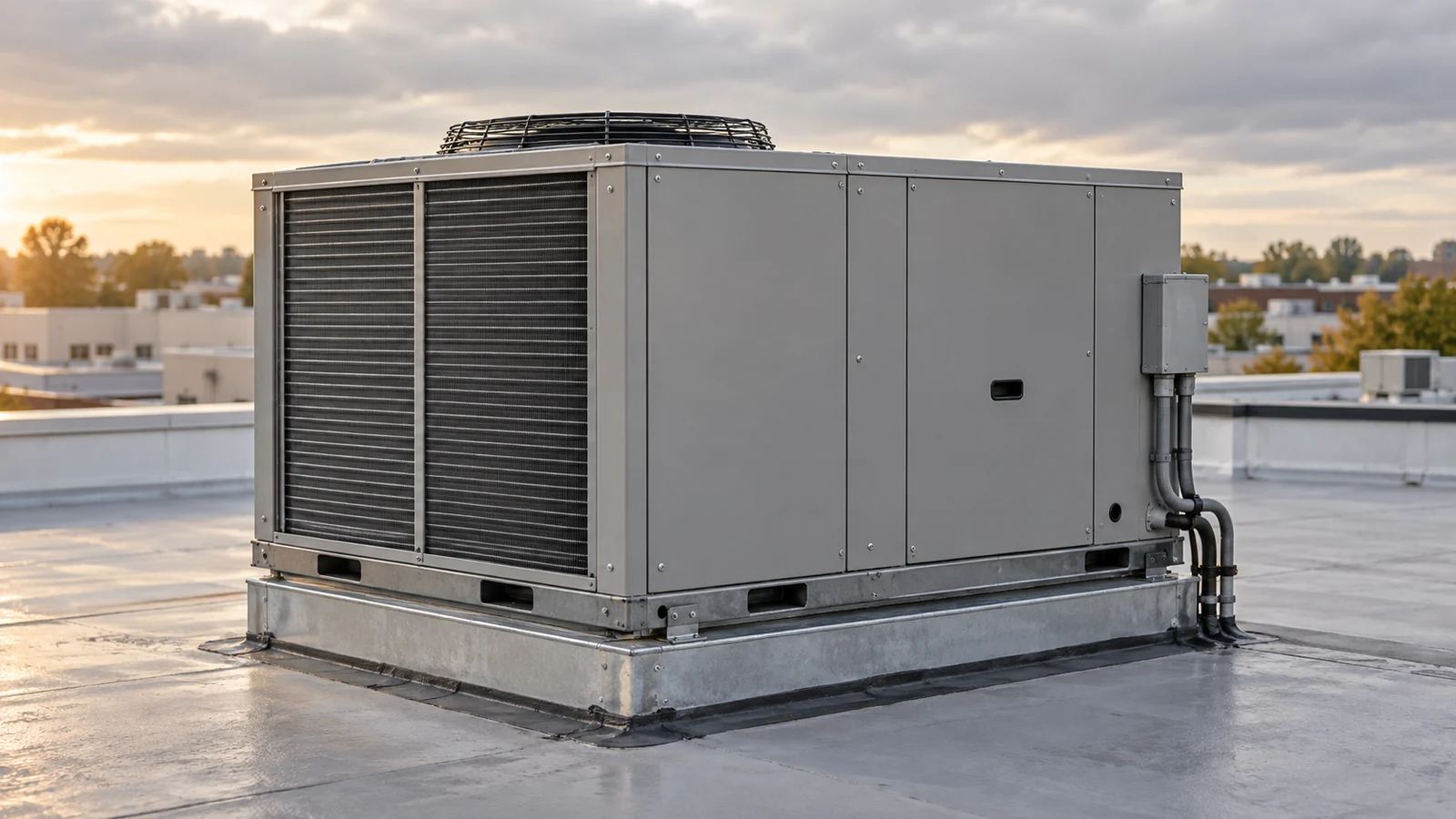
The commercial lease determines how HVAC repair costs are allocated; the landlord is not automatically the final payer simply because the equipment belongs to the building. Read maintenance, repair, replacement and operating-cost recovery together. Also check the hours when heating, cooling and ventilation are supplied: a system that works during office hours may still leave your evening or weekend business paying for additional service.
The most important distinction is between who arranges the work and who ultimately bears its cost. A landlord can replace equipment and recover an amount from the tenant if the agreement permits it. A tenant can have a direct servicing obligation while major replacement remains with the landlord. Labels such as “net lease” do not resolve the wording. BDC specifically cautions that incidental costs can differ even within common lease categories. BDC: negotiating a commercial lease.
This guide concerns commercial premises in B.C., using sources checked on September 8, 2026. It does not import residential-tenancy repair rules into a business lease. The examples are different negotiated allocations, not statements of one mandatory legal result.
Define the system before assigning responsibility
“HVAC” can describe a rooftop unit serving only your premises, equipment shared by several tenants, or a building-wide plant with separate distribution and controls inside each unit. A tenant's thermostat does not establish ownership of the equipment it controls.
Ask for an equipment schedule identifying the unit, location, areas served, approximate installation date and service history. Have a qualified mechanical reviewer distinguish the base-building equipment from tenant-installed components. For a food business or another specialized use, identify whether exhaust, make-up air, refrigeration or process equipment is addressed separately; do not assume every fan belongs in the same lease definition.
This matters when the repair covenant refers to equipment “exclusively serving the premises.” A unit on the roof may still fall within that description. Conversely, a shared system may be governed by the landlord's service covenant and an operating-cost formula rather than a direct tenant repair clause. Ask the lawyer to map those words to the equipment the reviewer has actually identified.
Public Vancouver records illustrate how explicit that allocation can be. Commercial lease terms approved by Council in October 2017 assigned regular service, maintenance, repair and replacement costs for exclusively serving HVAC units to the tenant. The record also said rights and obligations would arise only when the lease was fully executed. It is a dated example of proposed commercial terms, not proof that every City lease—or your lease—has that allocation. City of Vancouver, October 3, 2017 in-camera decisions.
“Repair” and “replacement” need more than a dictionary definition
Routine servicing, fixing a failed component and replacing a complete unit can create different bills. But the physical description alone does not decide which party pays. A clause might expressly include replacement in the tenant's repair obligation, reserve certain capital items to the landlord, or distinguish ordinary wear from damage caused by the tenant.
For a disputed compressor failure, obtain the technician's written diagnosis, proposed scope and alternatives. Is the work restoring the existing system, replacing a major component, or providing equipment with different capacity? Then have the lease interpretation address that scope. The contractor's invoice heading “capital replacement” does not itself amend the parties' agreement.
Check how any cap works. A hypothetical promise that the tenant pays no more than $2,000 of qualifying repairs per lease year differs from a $2,000 limit per incident, and neither necessarily limits capital replacement. If a qualifying repair costs $4,800 and the agreed annual cap has not previously been used, the first version would allocate $2,000 to the tenant and $2,800 elsewhere under the negotiated clause. That result depends on the stated cap and coverage assumptions; it is not a statutory allowance.
Also identify the starting condition. A covenant to keep equipment in repair, a promise about its condition at possession, and an agreement to correct an existing defect address different moments. A newly signed lease does not make an old unit new. If condition at handover matters, request a defined test, the records to support it and advice on an appropriate landlord commitment.
Follow the bill through operating costs
After finding the landlord's obligation to do the work, continue reading. Can the cost enter operating expenses or additional rent? Are capital items excluded, included in full, or recovered over time? Is interest added? Does a management fee apply? Is the amount allocated to all tenants or only the premises benefiting from the system?
A historical operating statement can show what was charged, but the contract must establish what is recoverable. Ask for the invoice and calculation behind any material HVAC line. Look for the allocation percentage, the start date, prior amounts recovered and whether the same expenditure is also being billed directly. A cost should not be counted twice in your own budget simply because it appears in two supporting schedules.
Three hypothetical contracts show the difference. Each assumes a $36,000 replacement event and excludes tax, interest, administration fees, exceptional damage and unrelated operating expenses. The arrangements are intentionally different:
| Contract assumption | Who arranges replacement? | Tenant's replacement charge in the first full year |
|---|---|---|
| A: landlord bears capital replacement, expressly excluded from recoveries | Landlord | $0 |
| B: tenant bears full replacement cost for its dedicated unit | Tenant, subject to agreed approval/access rules | $36,000 |
| C: landlord replaces a shared system; tenant pays 25% of straight-line recovery over 120 months | Landlord | $900 |
For C, the tenant's allocated capital amount is $36,000 × 25% = $9,000. Spread over 120 months, that is $75 a month or $900 for a full twelve months. If exactly 36 months remain in the lease, and the hypothetical contract charges only monthly recovery during those months with no acceleration or end-of-term balance, the remaining-term replacement charge is $2,700. The landlord retains the other exposure under that assumed arrangement.
If each example also has a separate $1,200 annual maintenance charge, the first full year's combined maintenance and replacement amounts are $1,200, $37,200 and $2,100 respectively. No $4,800 repair event is included in these totals; that earlier cap example is a separate scenario. This prevents a repair-versus-replacement comparison from quietly charging for both alternatives.
These calculations do not tell you which structure is available or appropriate. They show which words are needed before an affordable-looking monthly rent can be turned into a credible occupancy budget.
A monthly repayment can still leave a termination balance
For your agreement, ask what happens at ordinary expiry, early termination, assignment and renewal. Those events may be treated differently. If you are buying a business, obtain any HVAC repayment amendment as well as the main lease. A clean-looking base-rent schedule can miss an equipment balance in a side agreement.
For example, an entirely separate hypothetical $18,000 interest-free repayment over 36 equal months is $500 a month. After 12 instalments, $12,000 remains. If that hypothetical agreement makes the unpaid balance due on termination, the tenant cannot budget the departure as merely stopping future monthly payments. This is arithmetic under an express assumption, not advice that a particular termination clause is enforceable or triggered.
The commercial lease assignment guide addresses the wider transfer question. Here, identify the HVAC obligation that needs to be included in that review.
Check service hours and failure procedures before opening
Compare the HVAC schedule with actual business hours, including preparation, cleaning and staff time. Who controls the plant or thermostats? Is after-hours service available, how much notice is required, and is the charge hourly, per request or subject to a minimum? Can you obtain ventilation without paying for the entire building's heating or cooling system? Ask the landlord to explain the actual configuration rather than assuming a technical solution exists.
Consider a hypothetical four-week planning period with 10 chargeable after-hours hours per week at an agreed $45 per hour. The additional service cost is 4 × 10 × $45 = $1,800. That is a stated-rate illustration, not a Vancouver market rate or a standard monthly billing convention. Even with capital replacement assigned to the landlord, service-hour charges could materially change the tenant's operating budget.
Separate routine service from an outage. Confirm the emergency contact, who may authorize a call-out, contractor approval, roof access and notice requirements. Ask what the lease says about interruption, temporary equipment, business losses, rent relief and remedies. Do not assume you may withhold rent or deduct a contractor's invoice without advice on the actual agreement.
Cost allocation also does not settle safety or permit requirements for the proposed work. Have the qualified contractor identify the applicable approvals and safe access arrangements. Do not authorize an unapproved rooftop alteration simply because the lease makes you responsible for paying.
Match the mechanical review to the business you intend to run
A unit operating during a short viewing is not a reliable account of condition or capacity. Ask the reviewer to examine service and repair records, recurring failures, controls, accessible equipment condition and the suitability of the existing arrangement for the proposed use. Request a clear statement of what was not tested and whether seasonal conditions limit the assessment.
BDC describes mechanical systems, repair history, expected remaining life and estimated repair or replacement costs as parts of a commercial building condition assessment. A forecast of remaining life is a planning opinion, not a guarantee that equipment will survive the lease. BDC: building condition assessments.
When reviewing a replacement proposal, compare installation and ongoing costs rather than just the equipment price. Identify electrical or gas work, controls, roof work, access equipment, commissioning and any reinstatement included or excluded from the quotation. BDC's HVAC guidance likewise recommends considering operation and maintenance over the equipment's life. Do not import a generic efficiency saving into your forecast without a property-specific basis. BDC: maintaining HVAC systems.
Use the commercial HVAC contract-to-cost workpaper to record the equipment, payer clauses, recovery assumptions and any termination balance. It includes the calculations above and separates unpriced work from a zero cost.
For an owner buying a tenanted commercial building, review each lease separately before treating future HVAC spending as recoverable income. For a tenant or business buyer, bring the equipment schedule, relevant lease provisions, side agreements, service records and cost-recovery calculation to the same review. The desired answer is concrete: who must act, who pays, when payment is due, what happens if the system fails, and what balance could remain when the tenancy ends.
By Justin Qiao, Personal Real Estate Corporation, Justin Qiao Group | RE/MAX Crest Realty.