
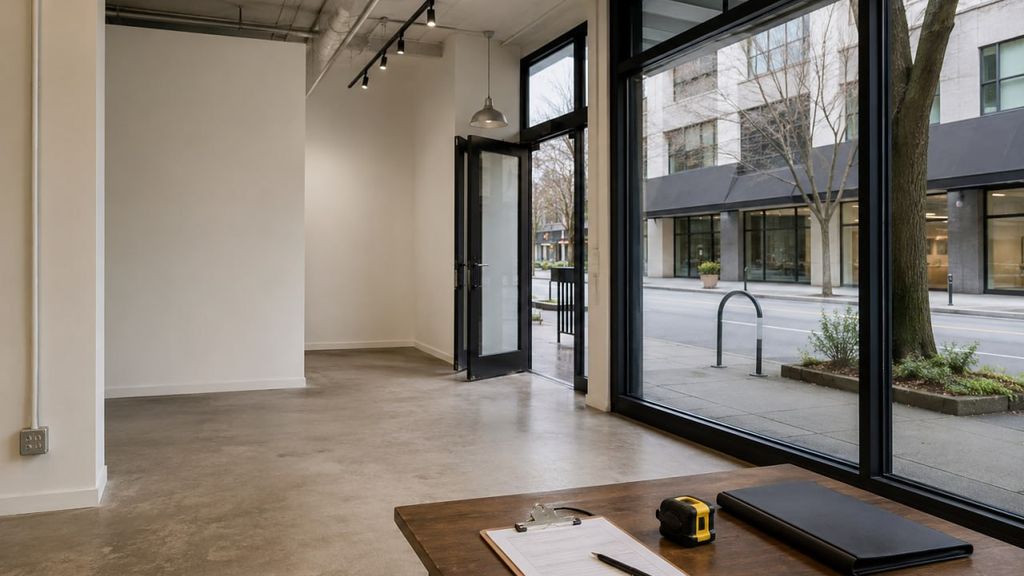
Vacant Commercial Property: Opportunity or Red Flag?
Quick answer
A vacant commercial property can be an opportunity if the vacancy is explainable, the space can be leased or used realistically, and the carrying costs are affordable. It can be a red flag if the rent assumptions are optimistic, the use is limited, the building needs expensive work, financing is difficult, or the location no longer fits tenant demand. The key question is not “Why is it empty?” only. It is “What will it take, in time and money, to make this space productive?”
Who this is for
This is for Greater Vancouver buyers, investors, and owner-users considering a vacant retail, office, industrial, strata commercial, mixed-use, or service-commercial property.
Justin’s note
Vacancy makes a property easier to imagine. You can picture your own tenant, your own business, or a better rent. That imagination can create upside, but it can also hide risk. I prefer to underwrite the property as if leasing takes longer, costs more, and requires more concessions than the optimistic version.
Understand why the property is vacant
Vacancy has many explanations. The previous tenant may have retired, relocated, outgrown the space, or failed for reasons unrelated to the property. The landlord may have kept the space empty for sale flexibility. The unit may need repairs, a change of use, or modernization before it can attract tenants. The location may have lost foot traffic, parking, visibility, or access. The rent may simply have been too high.
Ask for the leasing history. How long has it been vacant? What rent was previously achieved? What use occupied the space? Were there complaints, arrears, disputes, or building issues? Has the seller tried to lease it? If yes, what feedback came from tenants and brokers? A short vacancy after a normal tenant move-out is very different from a space that has failed to lease for two years.
Test the lease-up assumptions
A vacant property is often valued on what it could earn. That makes assumptions critical. Estimate realistic market rent, free rent, tenant improvement allowance, leasing commission, downtime, legal fees, and base building work. Then test a conservative scenario.
For example, if the pro forma assumes a tenant signs immediately at a strong rent with little allowance, ask what happens if it takes nine months and requires improvements. Can the investment still work? If not, the property may be priced for perfection. Buyers should distinguish between “vacant because nobody has tried properly” and “vacant because the market is telling you something.”
Calculate carrying cost before income arrives
Vacant commercial property still costs money. Mortgage payments, strata fees, property taxes, insurance, utilities, security, maintenance, repairs, management, and accounting continue whether rent is coming in or not. Some costs may rise when a space is vacant because insurers, lenders, or municipalities treat vacancy differently.
Owner-users should also consider business delay. If permits, improvements, licensing, or equipment installation take months, the property may be owned before it is usable. Investors should hold enough reserves for a slow lease-up and unexpected repair items.
Verify zoning, permitted use, and approvals
A common mistake is assuming that a vacant space can be used for any commercial purpose. Zoning, strata bylaws, building code, fire requirements, parking, loading, ventilation, grease interceptors, washrooms, accessibility, signage, and municipal licensing can all limit use.
This matters for restaurants, childcare, medical, education, fitness, assembly, food production, cannabis, automotive, and light industrial uses. A space may look perfect but fail because the desired use is not permitted or because required upgrades are too expensive. Before waiving conditions, confirm the use with the municipality, strata, landlord-related documents if applicable, and qualified professionals.
Review building condition and base systems
Vacancy can reveal issues that an occupied space hides. Check HVAC, roof, drainage, electrical capacity, plumbing, sprinklers, fire alarms, elevators, storefront, flooring, envelope, environmental concerns, and previous improvements. For strata commercial, review strata minutes, budgets, insurance, bylaws, depreciation reports, special levies, and repair plans.
In older commercial properties, environmental review may matter, especially where prior uses included fuel, dry cleaning, automotive, industrial, printing, or other potentially contaminating activities. Do not assume a clean-looking unit has no environmental history.
Financing may be more conservative
Lenders often prefer stable income. A vacant commercial property can face lower loan-to-value, higher rate, shorter amortization, more equity requirement, stronger borrower scrutiny, or a demand for a clear owner-use or leasing plan. If the deal depends on future rent, the lender may not give full credit for that rent until a lease is signed.
Buyers should speak with financing advisors early. A property that works at 75 percent financing may not work at 55 percent. Financing conditions are part of the risk review, not a formality.
Greater Vancouver context
Greater Vancouver has high land values, limited small-bay supply in some areas, evolving office demand, strong competition for certain industrial spaces, and uneven retail performance depending on street, parking, visibility, and local demographics. Vacancy in one segment may signal opportunity, while vacancy in another may signal a mismatch between rent expectations and tenant demand.
Municipal differences matter. Richmond, Burnaby, Surrey, Vancouver, Coquitlam, and North Vancouver can differ on zoning, parking, approvals, business licensing, and redevelopment pressure. A vacant unit near transit or dense housing may have a very different tenant pool than a similar-sized unit in an auto-oriented area.
Common mistakes
The first mistake is valuing the property based on the seller’s best-case rent. The second is ignoring downtime and improvement allowances. The third is assuming financing will be easy. The fourth is failing to verify use before committing. The fifth is focusing only on price per square foot while missing operating costs, repair obligations, and strata risk.
Another mistake is confusing vacant possession with flexibility. Vacant possession helps if the space fits your plan. It does not solve zoning, building, market, or cost problems.
FAQ
Is a vacant commercial property cheaper than a leased one?
Often it is priced differently because there is no current income, but not always cheaper. Some sellers price vacancy based on future potential. Buyers should compare price with realistic lease-up cost and risk.
Can I buy vacant commercial property for my own business?
Yes, but confirm zoning, permitted use, financing, improvement costs, permits, parking, signage, and timing before becoming firm. Ownership does not automatically mean the business can operate there.
How much vacancy reserve should an investor plan for?
There is no universal number. Build a conservative budget for downtime, operating costs, leasing costs, legal fees, improvements, and repairs, then test whether the investment still works.
Is vacancy always a warning sign?
No. Vacancy can create opportunity, especially for owner-users or investors who understand the space. It becomes a warning sign when the reason is unclear or the cost to solve it is underestimated.
References
- LendCity, Buying commercial real estate in Canada: https://lendcity.ca/blog/buying-commercial-real-estate-guide/
- CBRE Canada, Real estate market outlook: https://www.cbre.ca/insights/reports/canada-market-outlook
- BDC, Buying or leasing commercial real estate for your business: https://www.bdc.ca/en/articles-tools/money-finance/buy-lease-commercial-real-estate
- City of Vancouver, zoning and land use: https://vancouver.ca/home-property-development/zoning-and-land-use.aspx
Disclaimer
This article is general information, not legal, environmental, financing, appraisal, or investment advice. Commercial property decisions should be reviewed with qualified professionals before subject removal or closing.
Soft CTA
If you are considering a vacant commercial property in Greater Vancouver, Justin Qiao can help you pressure-test the lease-up, use, financing, and due-diligence questions before you commit.