
Buying Beside Farmland in BC: What “Normal Farm Practice” Means
By Justin Qiao, Personal Real Estate Corporation, Justin Qiao Group | RE/MAX Crest Realty.
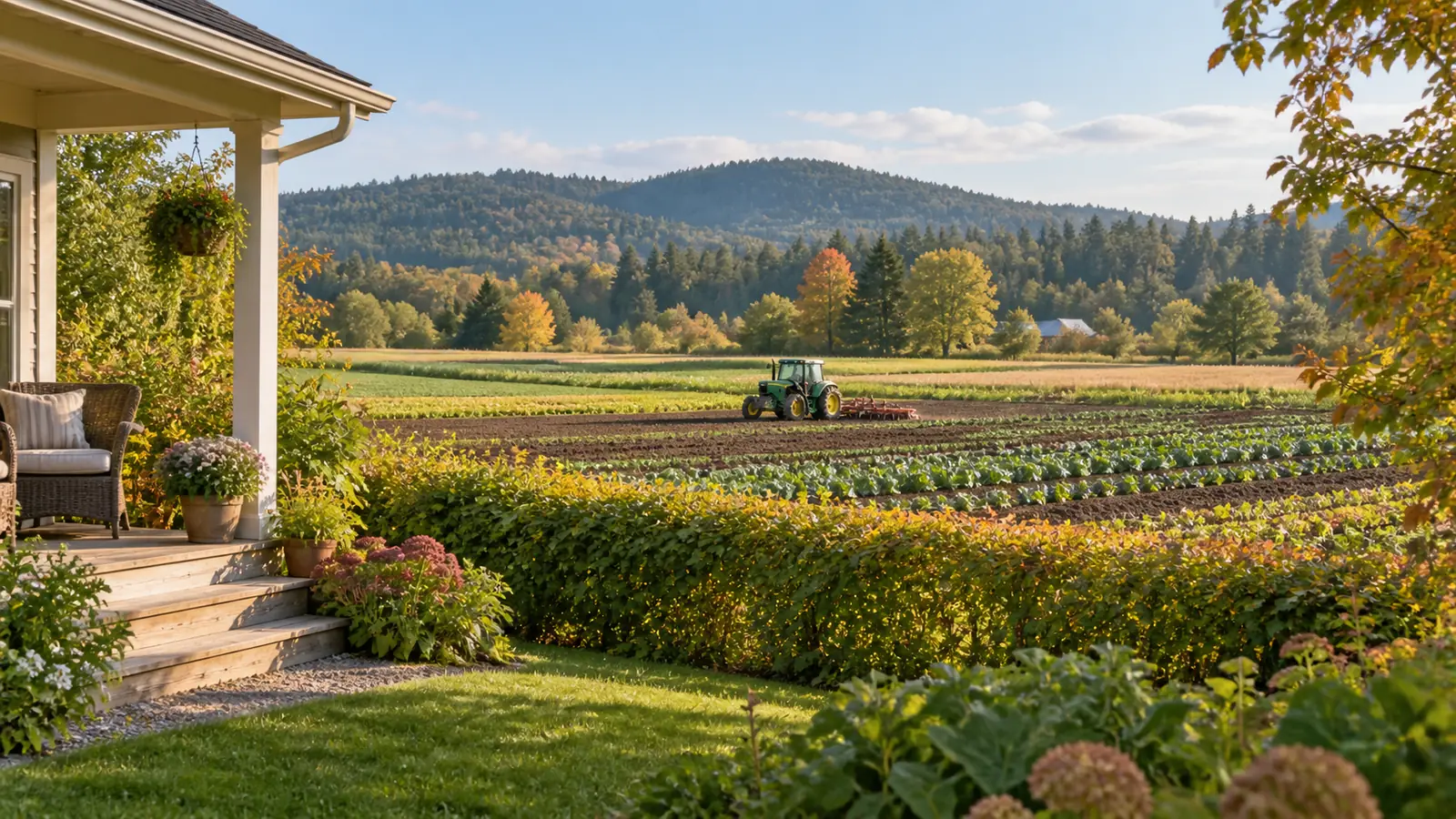
A home beside farmland can offer an appealing outlook, but the neighbouring land is a workplace, not a private park. Before buying, learn what is farmed, what seasonal activities affect the home and whether those activities fit your household. BC protects normal farm practices in qualifying circumstances. A future complaint is not a reliable plan for making agricultural neighbours operate like a quiet residential street.
That protection is not unlimited. The useful purchase decision combines two questions: what could you reasonably experience beside this operation, and what does the law actually protect?
First establish which property is in the ALR
Being beside the Agricultural Land Reserve does not establish that the home you are buying is itself in the ALR. Check the residential parcel and neighbouring parcels separately. An address description such as “country setting” does not answer either question.
The Agricultural Land Commission's map tools let you search by civic address or property identifier. The ALC describes the maps as general reference tools and directs users to its mapping staff for official confirmation. Do not use an approximate boundary line on a screen to settle a parcel-specific legal question. ALC: Agricultural Land Reserve maps
If the home itself is in the ALR, the purchase involves additional land-use restrictions beyond this article's neighbour question. ALC guidance says agriculture is the priority use and that both ALC legislation and local bylaws must be considered when using or developing ALR land. ALC: Buying and owning ALR land
For a residential property outside the ALR, still examine the nearby agricultural use and any relevant title conditions on the home. A residential zoning label on your own lot does not promise that everything audible from it will be residential activity.
“Normal” is a legal test, not another word for quiet
BC's Farm Practices Protection (Right to Farm) Act considers accepted practices of similar farm businesses in similar circumstances, along with prescribed standards. BCFIRB—the BC Farm Industry Review Board—explains that the determination is case-specific. The type of farm, the activity and the way it is performed matter. BCFIRB: Farm rights and responsibilities
Under section 2, protection requires a farm-business operation following normal farm practices, on land within a qualifying category, and without contravening specified health, pest-management, environmental laws or land-use regulations. Qualifying land is not limited to the ALR; the Act also includes land where farm use is allowed under the Local Government Act and other specified categories. The protection against particular bylaw enforcement has its own conditions. Farm Practices Protection Act, section 2
Consequently, neither “it is a farm, so every activity is protected” nor “it is noisy, so the municipality will stop it” is a sound purchase assumption. A photograph, a seller's reassurance or a single sound reading does not resolve the legal test.
Keep health, pollution and land-use concerns distinct from a normal-farm-practice complaint. BCFIRB identifies other agencies for issues such as health, environmental harm, zoning and land use. If there is a specific concern, ask the appropriate authority about that concern rather than expecting one tribunal to decide every neighbouring-property issue. BCFIRB: Issues and agency responsibilities
Investigate an operating year, not just the showing hour
The Province's farming guidance recognizes that odour, noise and dust can accompany farm operations and that farm and non-farm neighbours need compatible expectations. Its resources are intended to help people understand living near working agriculture. BC: Strengthening Farming Program
Turn that general context into questions about the actual location. What is being grown or raised now? Where do machinery, deliveries, loading or animal areas sit in relation to the bedroom windows and outdoor space? Are there periods of planting, harvesting, manure handling or crop protection that are not represented by this week's showing?
Ask for factual information about known activities and complaints. A neighbour may describe an experience without knowing whether a practice was legally normal. A seller may accurately report a quiet visit without knowing the full operating cycle. Record who supplied the information, what period it covers and what remains unknown.
Visit at relevant times when access is permitted, and observe from the home or public areas. Do not enter farmland, interrupt machinery or fly a drone over operations to investigate a house purchase. If a conversation with the farmer is appropriate, ask respectfully about typical activities; you are seeking context, not a promise to run the farm around your household.
Test the fit with your own use of the home
Consider a hypothetical couple comparing a home with a rear patio overlooking cultivated land. One person works from home with the windows open; the other often sleeps during the day. Their Saturday afternoon showing is quiet. A later weekday visit includes audible machinery, and they have not yet learned what happens during harvest. This is an invented scenario, not an account of a JQ showing.
The quiet visit is real within the example, but it does not answer the weekday-work question or the unobserved season. The machinery observation also does not establish excessive noise or an unlawful practice. The couple needs to decide whether the likely operating pattern is compatible with their routine, with those unanswered periods still visible.
They could seek better information and revisit before committing. They could compare another home whose main sleeping and working rooms face a different direction. Or they could decide that this location does not suit them. None of those choices requires proving that the farmer is doing something wrong.
Do not assume a fence, hedge or new window package will solve the issue without understanding the specific design, permissions and limitations. The farm-neighbour fit record separates observations from household requirements so a pleasant view does not silently outweigh an essential need for predictable quiet.
Current crops do not guarantee the future view
ALR protection prioritizes agriculture; it does not preserve the exact crop, operator, equipment or appearance visible today. Evaluate the outlook as neighbouring working land, not as an amenity you control. The current use and a possible future use are different questions; do not invent a planned change, but do not assume the present arrangement is permanent either. ALC: Agricultural priority and farm practices
If a claimed permanent view, buffer or use restriction materially affects your offer, ask what legal document or applicable rule supports it. Have that specific claim checked. A line of trees or an informal expectation is not, by itself, a promise about neighbouring land. For the separate question of registered restrictions, see title charges, easements and covenants.
Understand the complaint route without buying on its outcome
BCFIRB's process is for a person directly affected by a farm-business disturbance. Its guidance encourages informal resolution where suitable, followed by a formal written complaint if the issue remains. A complaint may lead to settlement or a hearing; it is not an advance approval service for every concern a prospective buyer imagines. BCFIRB: Farm practices complaints
As checked September 8, 2026, BCFIRB lists a non-refundable $100 filing fee. The rules require serving the farmer with the complaint when it is filed; for email or fax filing, the fee must be received within two business days, subject to the rules' extension provisions. Use the current filing instructions and obtain procedural help if needed. That payment deadline is not a two-day deadline for experiencing or reporting a disturbance. BCFIRB: Filing instructions and linked rules
The Act requires dismissal if the panel finds the disturbance results from normal farm practice. Otherwise, it provides for stopping or modifying the practice. Do not assume a particular outcome or that a dispute will be resolved within your purchase-condition period. Farm Practices Protection Act, section 6
Justin Qiao Group can help organize the property, title and neighbourhood questions before your offer depends on them. Choose the location with an understanding of working agriculture and your household's needs—not on the assumption that someone else's lawful business will change after you move in. This is general purchase information, not a finding about a specific farm or legal advice.

